Scale
Works across distributed facilities and departments
BlueDAG is strongest where spreadsheets break down: multiple sites, multiple teams, and long remediation timelines.
BlueDAG supports the public agencies and organizations that have to keep ADA work moving: cities, counties, parks, schools, transit systems, universities, housing authorities, and private facilities.
Title II applies to state and local government entities of every size. Cities, counties, public school districts, parks agencies, transit authorities, state universities, housing authorities, and individual departments all need a way to evaluate access, document barriers, maintain a transition plan, and show progress over time.
The details vary by sector, but the operating need is the same: accurate barrier documentation, clear tracking, and a record that can be reviewed without rebuilding the story from old files. BlueDAG provides that foundation in one platform.
Whether the portfolio is citywide, campus-wide, park-wide, or property-wide, the real issue is turning scattered findings into a managed compliance program.
Scale
BlueDAG is strongest where spreadsheets break down: multiple sites, multiple teams, and long remediation timelines.
Visibility
Leaders can see what was found, what is fixed, and what still needs funding without hunting through old reports.
Credibility
The system is designed to support structured records when agencies need to answer boards, investigators, or the public.
Municipal governments carry ADA compliance obligations across every department, building, and mile of public right-of-way they own and operate. That scope is enormous. A mid-sized city might manage hundreds of facilities, thousands of miles of sidewalk, dozens of parks, and programs spread across multiple departments, all of which must be evaluated and tracked.
BlueDAG's Government Suite gives city and county agencies a centralized system to manage self-evaluation, maintain a living transition plan, track barrier remediation, and handle public grievances. The platform scales from small municipalities managing a compact facility portfolio to statewide implementations covering multiple jurisdictions.
Why it works for municipalities
Parks agencies manage some of the most complex and varied ADA compliance portfolios in government. Trails, playgrounds, restrooms, parking areas, picnic facilities, boat launches, visitor centers, and program facilities each require evaluation against specific accessibility standards. No two facilities are evaluated the same way, and the sheer geographic distribution of parks assets makes traditional inspection methods impractical.
Oregon State Parks deployed 80 rangers using the BlueDAG Apprentice app and produced a complete, published transition plan within six months. Rangers who were not ADA experts could photograph and log barriers in real time using their mobile devices, and that data accumulated directly in the platform. What would have taken years of contracted consultant work was accomplished by the agency's own staff, in the field, as part of their regular duties.
BlueDAG supports the full range of parks compliance work in one platform: self-evaluation by rangers and staff, ADA inspections for complex facilities, virtual pre-inspection for distributed trails and right-of-way, and a transition plan that stays current as work is completed.
School districts must ensure that every campus, athletic facility, and program is accessible to students, parents, and staff with disabilities. A district with 20 schools must evaluate all of them, track barriers across campuses, prioritize remediation against limited capital budgets, and demonstrate progress to school boards and state agencies. That is a significant compliance program by any measure, and it must be maintained continuously, not revisited every five years.
BlueDAG supports districts in conducting facility self-evaluations, tracking barrier remediation across campuses, and building the documentation infrastructure necessary to demonstrate compliance progress. The City of Framingham used BlueDAG to systematically address ADA barriers across its K-12 schools, creating a structured program where findings from each building fed into a jurisdiction-wide transition plan that could be reported to governing bodies with confidence.
The Apprentice app allows non-expert staff, including principals, facilities managers, and program coordinators, to document barriers as they encounter them. That data reaches the central platform without any manual transfer, giving the district a current picture of conditions across all campuses at any time.
Transportation agencies face complex accessibility obligations spanning transit facilities, bus stops, passenger loading zones, rail platforms, pedestrian infrastructure, and the public right-of-way surrounding those assets. Evaluating and prioritizing accessibility improvements across a large, distributed network requires a platform designed for scale and geographic complexity.
BlueDAG supports transportation agencies in conducting systematic evaluations, managing findings across large networks, and maintaining the transition plan documentation required for federal funding compliance. The same Virtual Pre-Inspection tools that accelerate right-of-way evaluation for municipalities are equally purpose-built for transit agencies assessing pedestrian access routes and bus stop infrastructure.
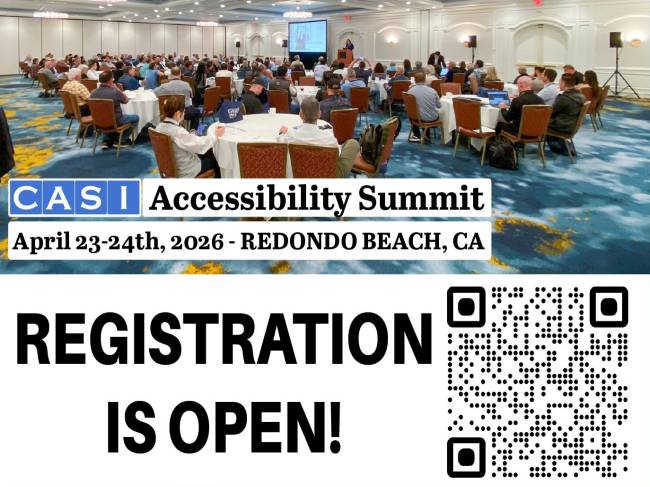
BlueDAG has exhibited at the AAAE/ACI-NA Airport Customer Experience Symposium, engaging directly with airport operators and aviation authorities on the specific accessibility challenges of terminal facilities, passenger boarding, and airside operations.
Colleges and universities must meet Title II requirements for all programs, services, and facilities. A large campus may include dozens of academic buildings, residence halls, athletic facilities, outdoor gathering spaces, libraries, theaters, and administrative offices, along with hundreds of programs offered to students, faculty, staff, and the public. Managing ADA compliance across that breadth requires a systematic approach and a platform capable of handling the volume.
BlueDAG provides the infrastructure to manage compliance at institutional scale. Self-evaluation by facilities staff and program administrators feeds data into a central platform. ADA inspectors, architects, and accessibility professionals address the most technically complex facilities. The Living Transition Plan documents progress continuously, satisfying federal requirements and giving the institution a current operating record that evolves alongside the campus rather than sitting in an archive.
As campuses expand, renovate existing buildings, and add new programs, the BlueDAG platform accommodates new facilities and updated evaluations without requiring a fresh start. The compliance program grows with the institution.
Housing authorities and public housing agencies are subject to both ADA Title II and Section 504 of the Rehabilitation Act. These overlapping frameworks require evaluation of unit accessibility, common areas, parking, paths of travel, and site features across every property in the portfolio. Federal reporting requirements demand current, structured documentation, and the consequences of noncompliance include loss of federal funding as well as civil rights liability.
BlueDAG supports housing authorities in evaluating the full scope of their facility portfolios and maintaining the records necessary for federal compliance reporting. The platform handles both the self-evaluation process and the ADA inspection workflow, so agencies can address barriers at the level of detail each facility requires without managing two separate systems.
As units are modified, buildings are rehabilitated, and new properties are added to the portfolio, BlueDAG's Living Transition Plan reflects those changes in real time. The agency always has a current picture of its compliance status and can demonstrate active, ongoing management of accessibility obligations.
Businesses subject to ADA Title III face a different legal framework than government agencies, but the practical need is the same: a documented record showing that the organization has evaluated its facilities, identified barriers, and is actively working to address them. In a Title III environment, that record is often the difference between a complaint that is resolved and a lawsuit that proceeds.
BlueDAG's Inspection Suite is available to private sector organizations for facility evaluations that produce the kind of structured, credentialed documentation that a defensible compliance posture requires. BlueDAG inspectors are available for Title III compliance evaluations across commercial properties, restaurants, retail locations, and hospitality facilities.
An ADA inspection workflow through BlueDAG produces findings that are documented against ADAAG standards, organized by severity, and stored in a platform that creates a permanent audit trail. For businesses operating in California, where credentialed inspections may provide added documentation value, this record carries direct legal value.

Every agency's compliance situation is different. Our team will ask the right questions, understand your obligations, and show you exactly how BlueDAG addresses them.
Contact Our Team