Operational goal
Get agencies moving quickly
- BlueDAG Launch organizes the initial rollout
- Staff start collecting usable data early
- Momentum is built around a working program, not a future promise
Most ADA compliance efforts begin and end with a hired consultant producing a written audit report. The report documents barriers as they existed on the day of the inspection, and then it is filed. Six months later, staff have changed, priorities have shifted, and no one can say with confidence what has been remediated, what remains outstanding, or whether the agency could defend its compliance posture in front of a federal investigator or disability rights attorney. The report captures one day. Compliance obligations continue every day after it.
The deeper problem is institutional knowledge. When the consultant leaves and the report goes into a drawer, the agency has no system for tracking progress, assigning remediation work, documenting completed improvements, or handling public grievances in a structured way. If the agency faces scrutiny from the Department of Justice or a civil rights complaint, the audit report offers little protection because it cannot show what the agency has done since the report was written. Compliance requires continuity, not a document.
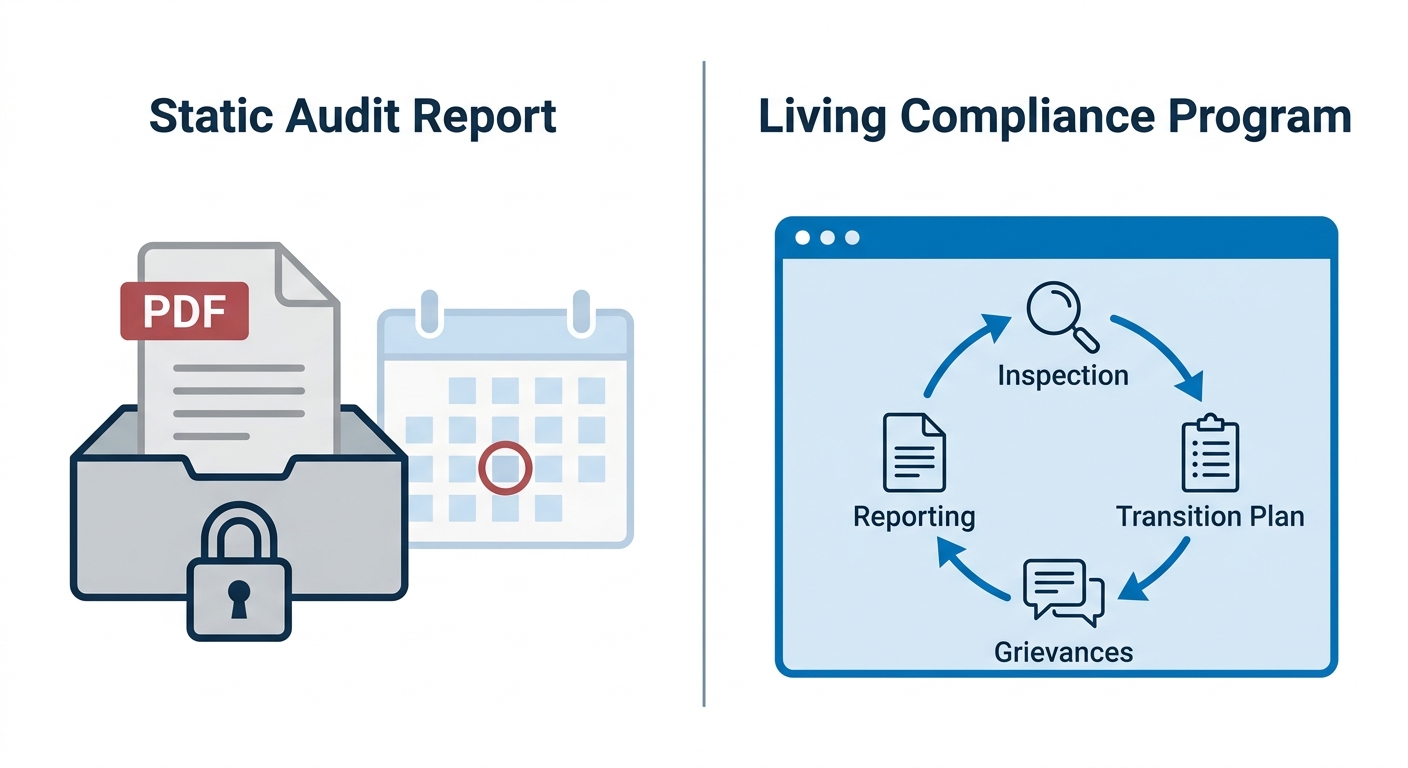
The point is continuity: setup, evaluation, planning, inspections, and ongoing management all stay inside one operating system instead of being broken into disconnected projects.
Operational goal
Program goal
Why buyers care
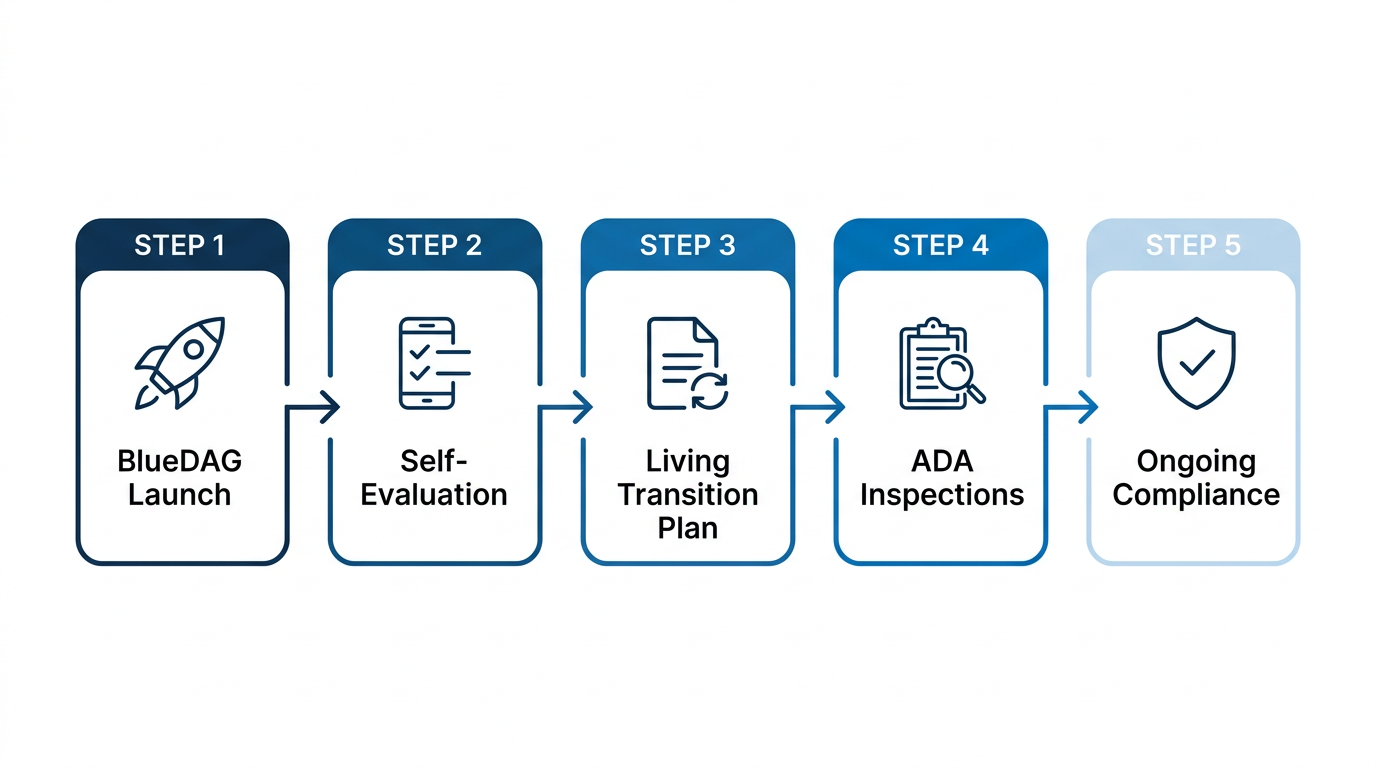
Every new client begins with BlueDAG Launch, our structured onboarding program built to show measurable progress in 90 days or less. A BlueDAG implementation specialist works with the agency to configure the platform, import facility data, establish jurisdiction boundaries, and train the core team. Launch sets up the ADA assessment, Transition Plan, and grievance workflows so the agency starts producing usable compliance data right away.
With the platform configured, the agency conducts its self-evaluation using the BlueDAG Apprentice mobile app. Non-expert staff photograph and log barriers at facilities, and data flows directly into the platform in real time. The Virtual Pre-Inspection tool allows teams to assess public right-of-way remotely before field visits, and in some deployments it can shift a meaningful share of evaluation prep into the office.
As evaluation data accumulates, the Living Transition Plan builds automatically. Unlike a static document, it reflects current conditions and updates as barriers are remediated. When kept current by the agency, it can serve as a complete compliance record that supports Title II program management and public reporting.
For facilities requiring certified professional evaluation, BlueDAG's network of ADA inspectors, architects, consultants, and accessibility professionals conducts on-site assessments. Inspection data flows directly into the platform, eliminating manual data transfer and report formatting. In many deployments, teams report substantial time savings compared with traditional inspection workflows.
The Client Success Manager meets with the agency quarterly to review progress, address barriers, update priorities, and ensure the platform is being used to its full potential. The transition plan is updated as work is completed and new facilities are added. Compliance becomes an ongoing program, not a periodic exercise.
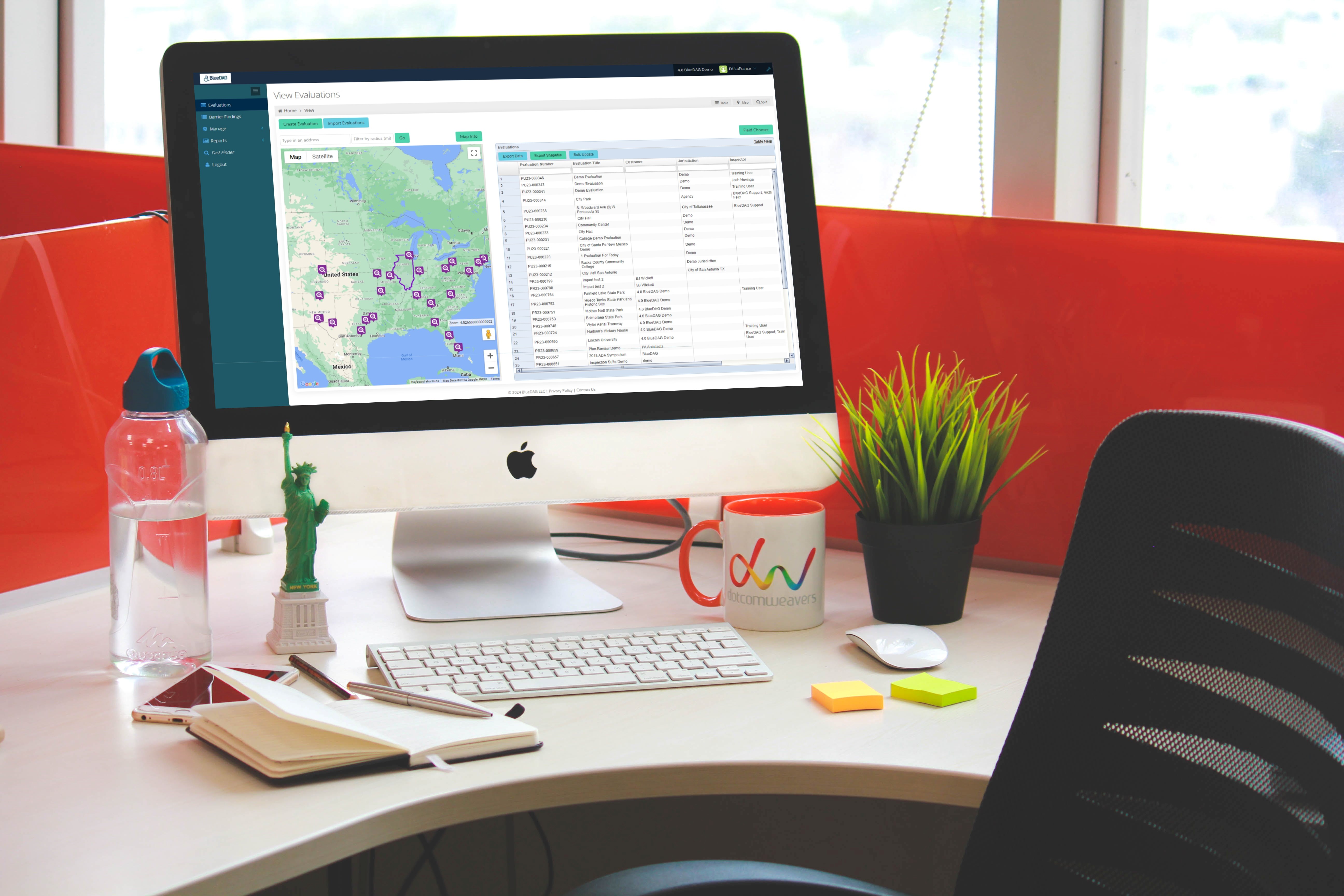
The BlueDAG platform gives agencies a centralized, map-based system to manage every aspect of their ADA compliance program. Barrier data collected in the field flows directly into the dashboard, the Living Transition Plan updates automatically, and reports are always current. Staff at every level interact with the same platform, so nothing gets lost in email threads or spreadsheets.
Unlike generic project management tools adapted for compliance use, every feature in BlueDAG was designed specifically for ADA Title II obligations. The platform reflects how government agencies actually work.
Explore the Platform
"Using BlueDAG, we have reduced our inspection and reporting times by more than 70%. It's been incredibly valuable in ensuring we finish projects ahead of time and under budget."
Schedule a demonstration and we’ll walk through the workflow, the platform, and how the process maps to your agency’s actual compliance situation.
Schedule a Live Demo